

30/11/2025 10:59 am
Topic starter
“Welcome to the Elouan Tennis Forum — the place where tennis lovers of all levels come together to talk matches, training, gear, and everything in between. Join us in sharing tips, stories, and the passion for the game!”
Let's talk about tennis : Let's go !
Hey guys,
>> Discover the ACEMATE tennis robot S10 on the official website
________________
Hi >>> Ful review here !!
https://elouan-tennis.com/acemate-tennis-robot-s10-our-review-after-real-test-on-court/
__________________
Status: I will receive and test the ACEMATE tennis robot S10 soon.
If you are thinking about buying a tennis ball machine today, I would definitely recommend taking a close look at the latest generation of machines.
Traditional ball machines are still very useful for repeating specific shots, but newer models are becoming much more interactive. Cameras, tracking systems, mobile apps and training data are gradually transforming them into genuine training tools rather than simple ball feeders.
The ACEMATE tennis robot S10 is probably one of the most ambitious examples of this new generation.
Thanks to its cameras and artificial intelligence, the robot is designed to track the ball, analyse what is happening on the court and react to the shots played by the user. More importantly, it can move laterally around the baseline instead of remaining in one fixed position.
On paper, this should make it possible to create more natural rallies, more realistic movement patterns and training sessions that feel closer to playing with a real partner.
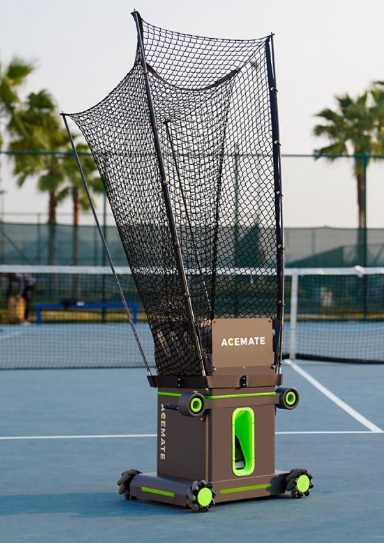
The big question, of course, is whether it works as well in real-life conditions as it does in the demonstrations.
I have not tested the machine yet, so this article is not a review. It is a preview based on the information currently available. Once the robot arrives, I will carry out a full hands-on test, publish a detailed review and share video footage of the machine in action.
In the meantime, here is what makes the ACEMATE tennis robot S10 so interesting and what I intend to examine during the test.
That is probably the simplest way to describe the ACEMATE tennis robot S10.
A traditional tennis ball machine remains in one place and launches balls according to a predefined sequence. The player hits the balls, but the machine does not really react to the quality, direction or depth of those shots.
The ACEMATE S10 is designed to work differently.
During a rally, the robot should be able to track the incoming ball, move into position, catch it in its net and then feed another ball back to the player.
This could completely change the feeling of a solo training session. Instead of simply waiting for the next programmed ball, the player would need to hit, recover, reposition and prepare for the next shot as part of a continuous rally.
It sounds impressive, but this is also the feature I am most curious to test.
How well will the robot deal with deep balls, short balls, heavy topspin or shots played close to the sidelines? How quickly can it move into position? What percentage of balls can it actually catch during a realistic rally?
These questions can only be answered on court.
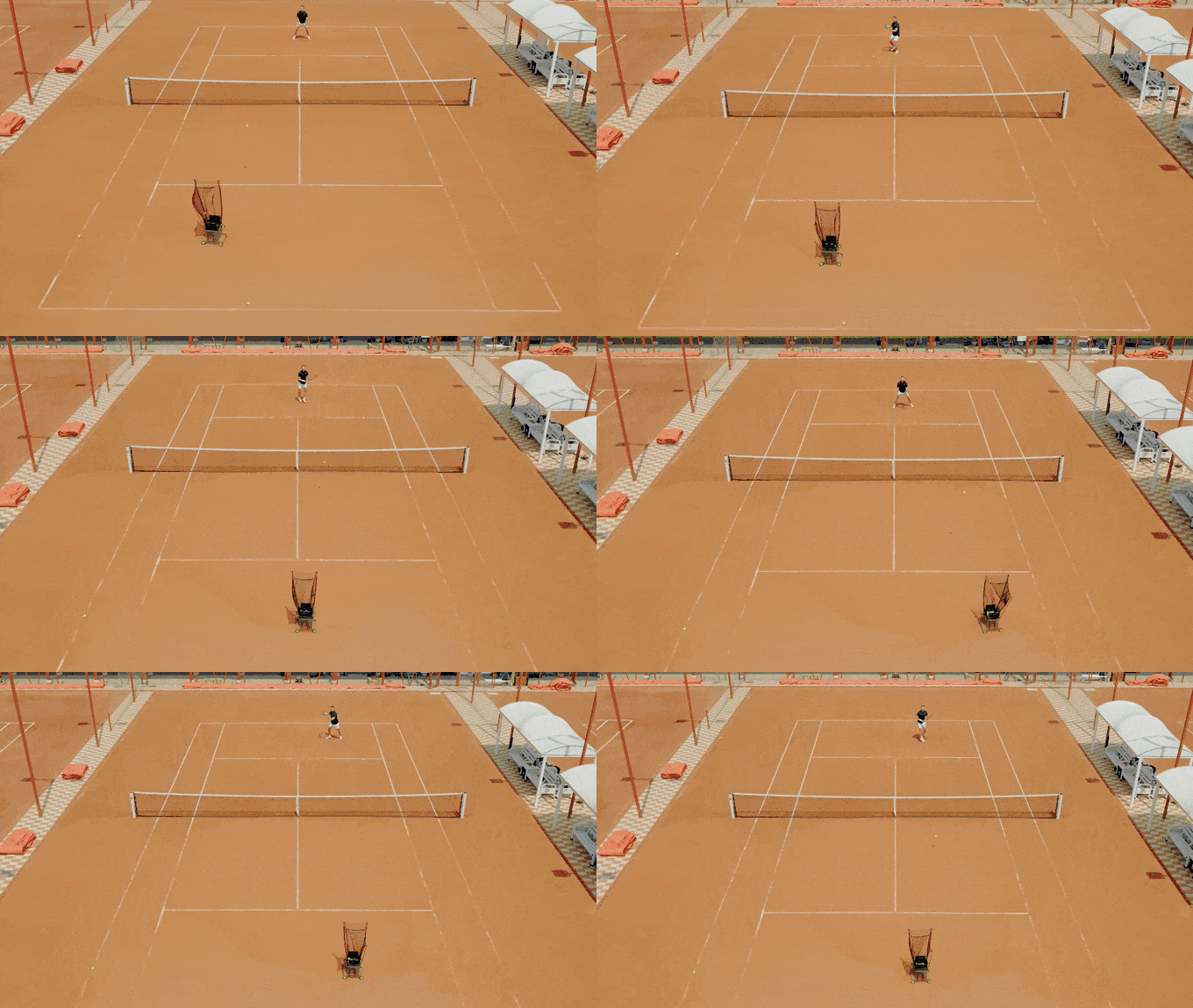
The ACEMATE tennis robot S10 offers three main ways to train:
Each mode appears to target a different type of training session.
Rally Mode is the feature that makes the ACEMATE S10 fundamentally different from a traditional ball machine.
The player hits the ball towards the robot. The robot then tracks the shot, moves behind the expected bounce, catches the ball and sends another one back.
The aim is to create a continuous exchange rather than a simple sequence of independent feeds.
This could be particularly interesting for working on consistency, recovery between shots, court positioning and maintaining concentration during longer rallies.
During the review, I will try this mode with several playing styles and levels. A controlled rally with a recreational player is one thing; dealing with faster, deeper and more heavily spun shots from a competitive player is another.
Drill Mode appears to focus more on accuracy and measurable objectives.
The player can work towards specific target zones and receive information about shot placement, consistency and session results.
This mode could be useful for exercises such as:
The app should also make it possible to review the results after the exercise, including information such as landing points, ball speed, number of shots and overall accuracy.
This is a promising idea, especially for coaches who want to measure progression over several sessions. However, the value of the system will depend heavily on the accuracy and readability of the collected data.
The ACEMATE S10 can also be used as a more traditional programmable ball machine.
In this mode, the robot can remain in position and feed balls to different areas of the court according to a selected drill or custom programme.
This should make it possible to work on forehands, backhands, volleys, lobs, overheads and movement patterns in a more conventional way.
This mode will be particularly useful for comparing the ACEMATE S10 with other machines I have already tested.
I will be looking at the consistency of the feeds, the accuracy of the selected zones, the quality of the topspin and slice, the available ball speed and the time between each shot.
The mobile application seems to be a major part of the ACEMATE experience.
It should allow the user to select training modes, choose exercises, create custom drills and adjust different parameters.
From the available screenshots and demonstrations, the app also appears to provide training information such as:
The ability to create a drill and immediately analyse the results could be one of the most useful aspects of the machine.
Many training applications display a large amount of data, but the real question is whether that data helps a player or coach make better decisions.
I will therefore look beyond the design of the app and examine how useful it is during an actual training session.
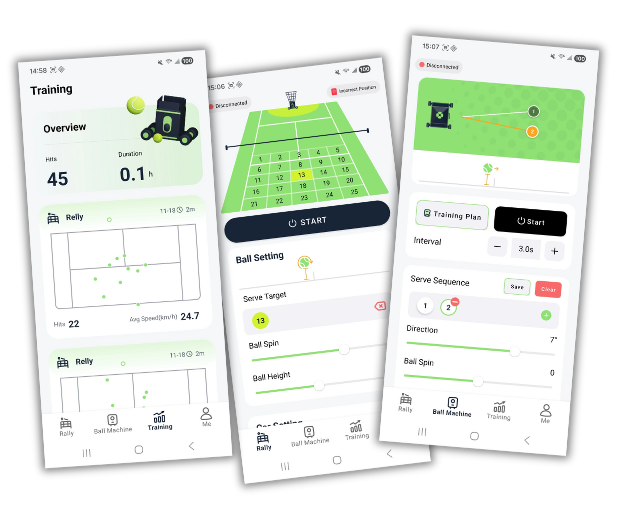
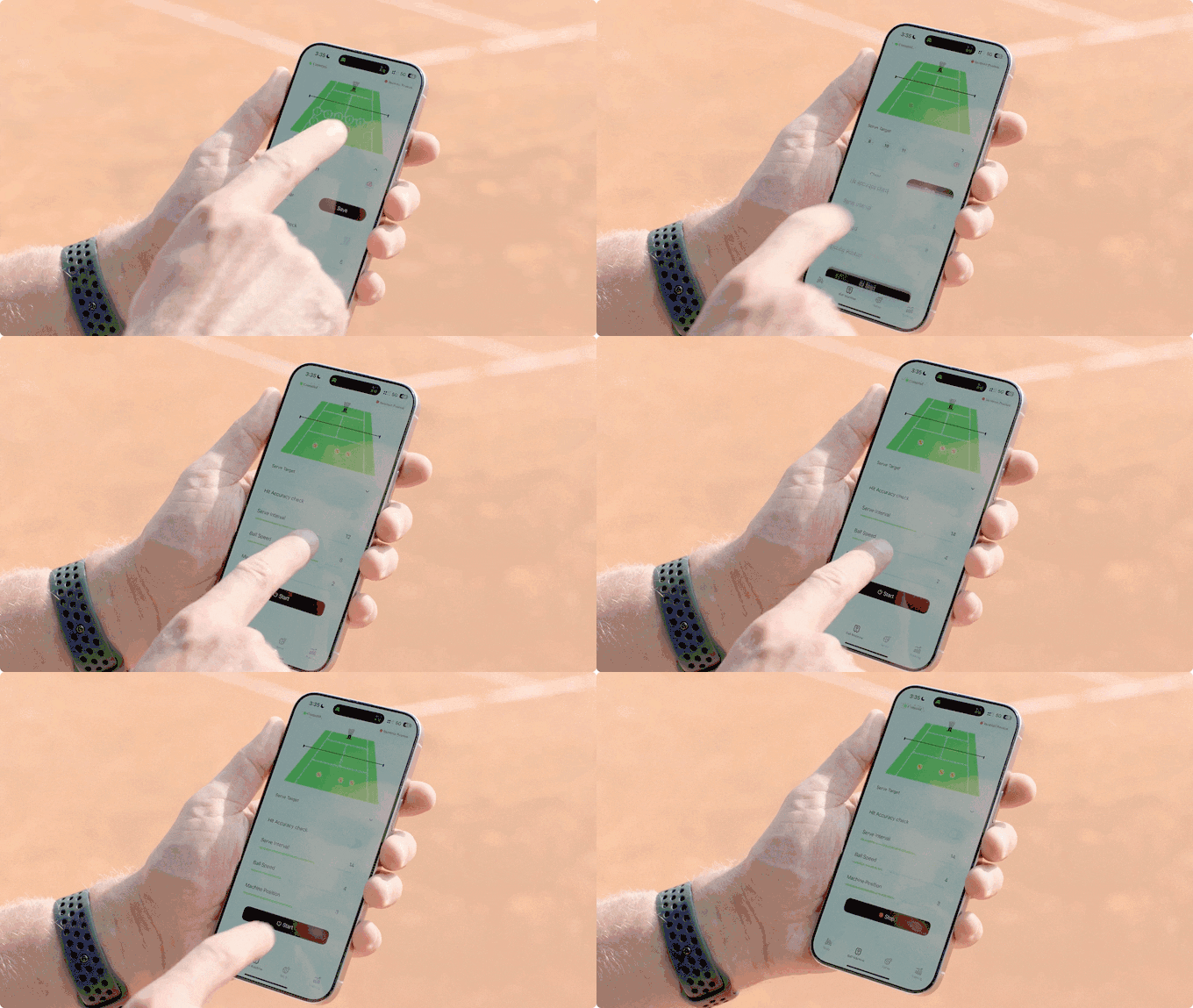
The final review will not simply repeat the specifications provided by the manufacturer. The aim will be to determine what the ACEMATE tennis robot S10 can genuinely bring to a tennis training session.
I plan to examine:
I also want to test whether the machine really encourages proper recovery and positioning between shots.
With a traditional ball machine, it is often possible to anticipate the next feed and remain in an unrealistic position. A robot that reacts to the player’s actual shot could potentially create a much more natural training rhythm.
The ACEMATE S10 should not be judged only on its ability to move around the court.
Modern high-end ball machines can already produce fast, accurate and highly varied feeds. Some models offer advanced drills, spin control and programmable sequences.
The ACEMATE will therefore need to prove that its movement and ball-catching system provide a genuine training benefit.
The comparison will focus on:
It will be interesting to see whether the ACEMATE S10 can replace a traditional premium ball machine or whether it should instead be considered a complementary training partner with a very different purpose.
The ACEMATE tennis robot S10 is undoubtedly one of the most intriguing tennis training machines currently being developed.
Its main idea is genuinely innovative: rather than simply launching balls, it attempts to interact with the player’s shots and create a more realistic rally.
If the tracking, movement and catching systems work reliably, the ACEMATE S10 could offer a completely different solo training experience.
However, several important questions remain.
Can it keep up when the pace increases? Can it deal with heavy topspin, wide angles and changes of direction? Are the balls it returns consistent enough for serious training? Is the app data really useful? And is the robot suitable only for recreational players, or can it also challenge competitive players?
These are exactly the questions I will try to answer during the full test.
The ACEMATE tennis robot S10 is currently on its way and should soon be installed on the court.
After several training sessions, I will publish a complete hands-on review, including video footage of the robot moving, catching balls and operating in each of its training modes.
I will also compare it with more traditional ball machines and test it with players of different levels.
If there is a particular drill, shot or situation you would like to see tested, feel free to share your ideas. I will try to include the most relevant suggestions in the final review.
>> Discover the ACEMATE tennis robot S10 on the official website
This article is a preview and not a final review. An ACEMATE tennis robot S10 is being provided for testing. The final article will reflect my own experience after using the machine on court.

It seems perfect for someone like me who travels for work and can't keep a regular hitting schedule. The idea of booking a court and having a 'partner' that's always available is tempting. But the sheer size and weight look like a hassle. Is it easy for one person to transport and set up, or do you need a dedicated cart and 15 minutes of setup?

I think this machine is easy enough to transport from home to another court or to a club, but if you’re travelling by plane or train it becomes more complicated.
In other words, it’s easy to move around by car, but not much more than that.
The Tenniix would be a better option if you’re looking for something truly portable.
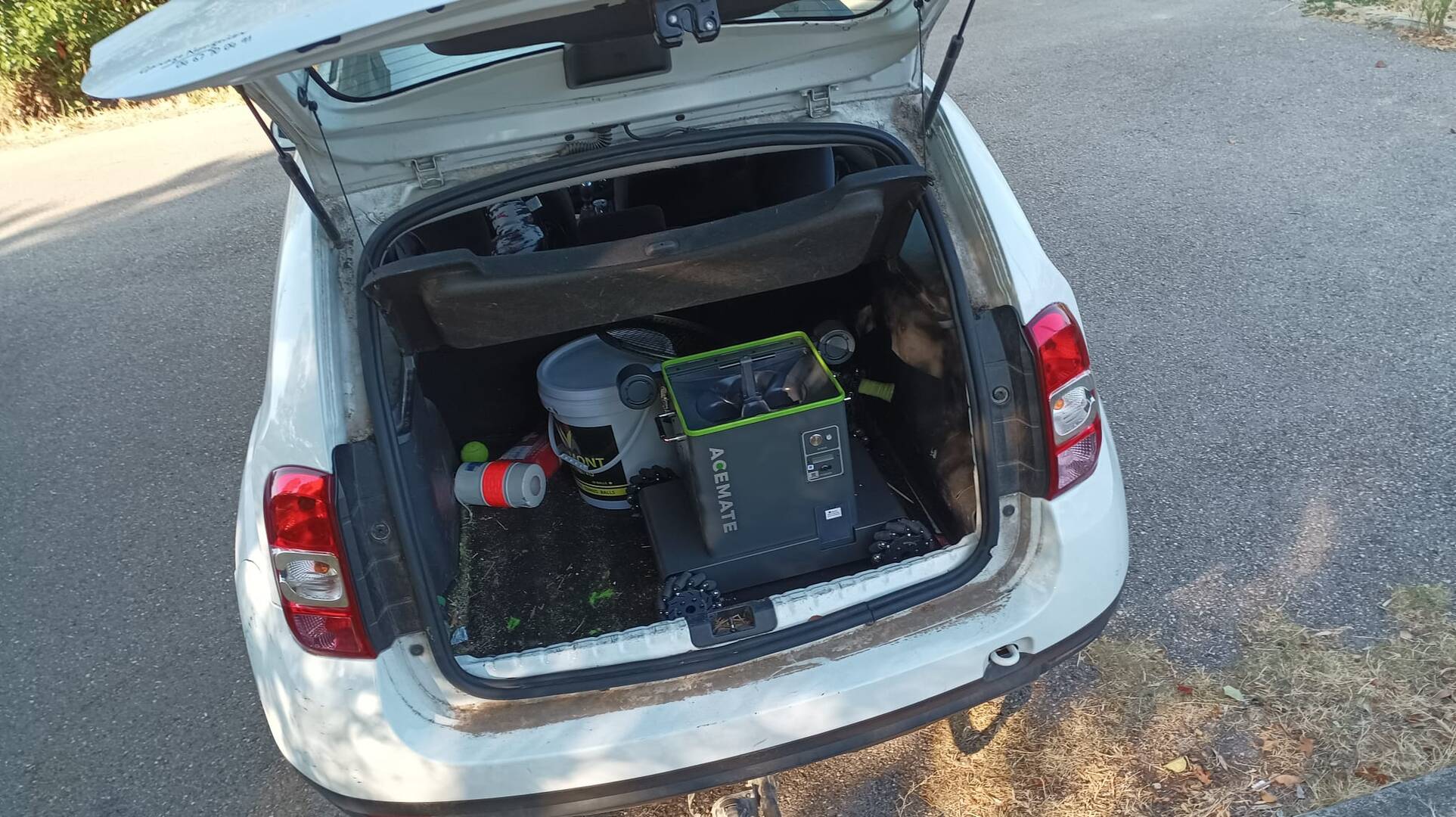
It’s actually very easy for one person to transport and set up. I simply put it in the trunk of my car. You only need to remove the net, which takes literally a couple of seconds, and then it’s ready to be transported.
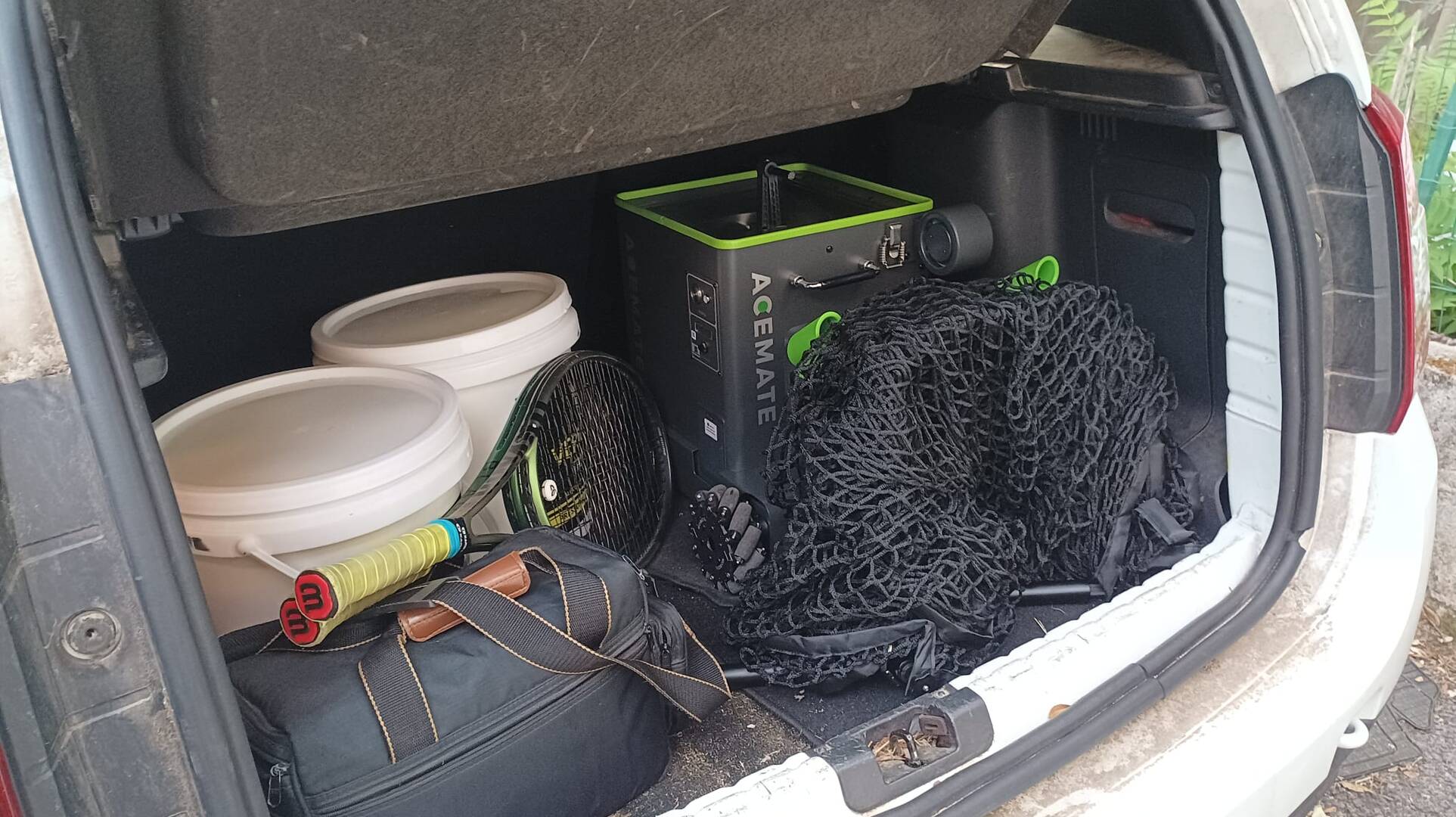
There’s no need for a dedicated cart or a long setup process. I’ve added a photo so you can see how easily it fits in the car.